
5 hr 30 min
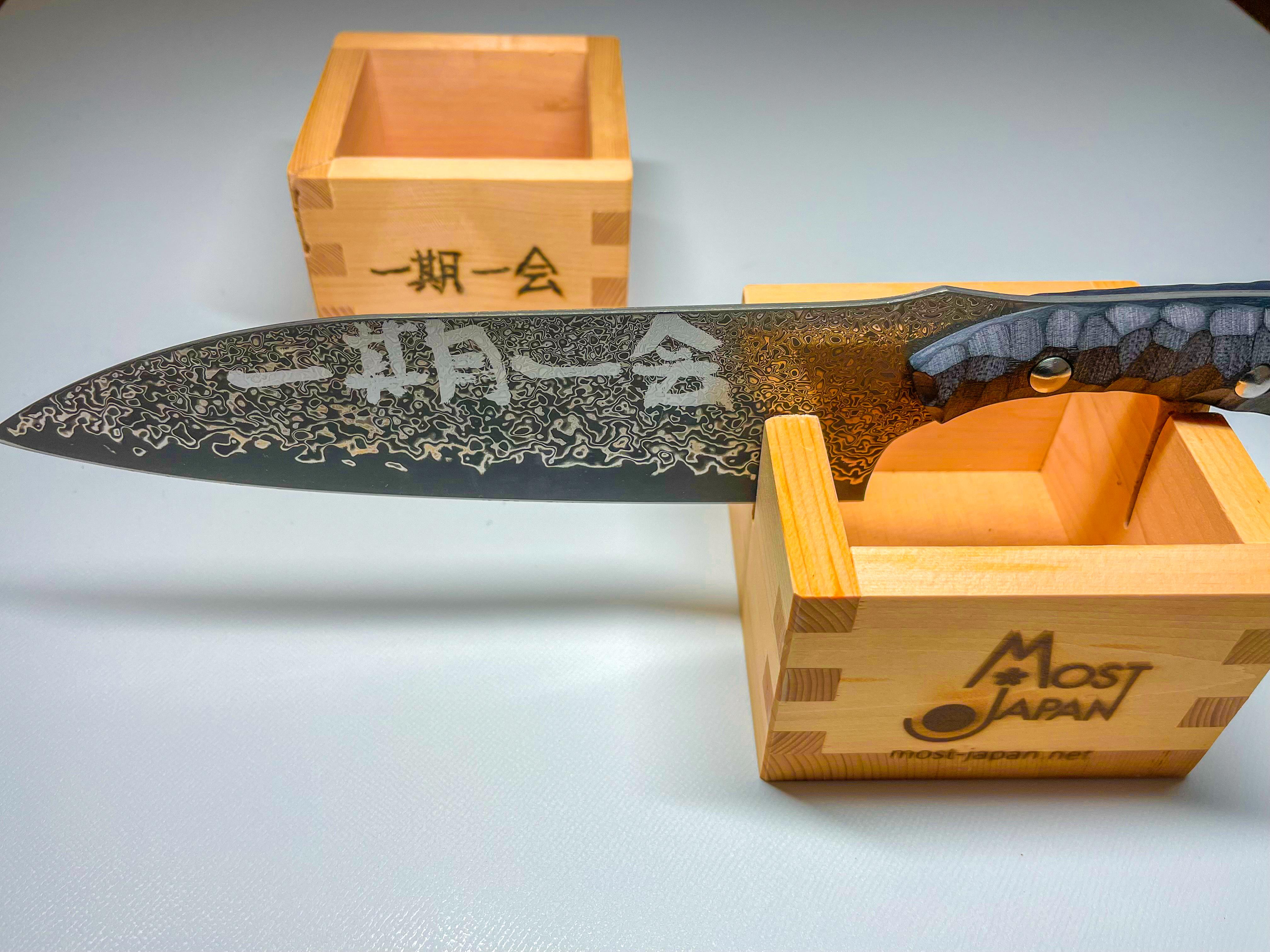
Damascus Blade Crafting Workshop in Seki
Craft your own personalized Damascus kitchen knife with a master artisan in Japan's legendary blade capital
Reserve
Hand-picked by our editors — only the best 5 experiences from 40 reviewed.
Verified partners for every tour, free cancellation where available, and instant confirmation on every booking.
5 hr 30 min
Craft your own personalized Damascus kitchen knife with a master artisan in Japan's legendary blade capital
Reserve
4 hr
Create your own kitchen blade using authentic samurai sword steel in Japan's historic blade capital
Reserve
1 hr 30 min
Watch authentic Japanese sword forging up close with an English-speaking craftsman in the blade capital of Japan
ReservePrices from verified partners. Availability updates in real time at checkout. Free cancellation policies apply where shown.
The landmarks, rooms, and views travelers on this tour remember — all visible on a single visit.
Features blades by master smiths Kanemoto and Kanesada with original period designs.
Showcases modern Seki cutlery techniques and high-quality artisan blades.
The core of the museum where masters perform the ancient forging process.
Observe the meticulous whetstone sharpening and sheath-making stages of production.
Provides context on the 700-year legacy of the City of Blades.
The museum offers deep insight into traditional metallurgy, while practical workshops allow participants to engage directly in the craft of blade creation.
| Feature | Top pick Seki Sword Making | Seki Knife Forging |
|---|---|---|
Experience Type |
Observational museum display | |
Depth of Historical Context |
Extensive scholarly archive | |
Physical Exertion |
Low (walking) | |
Souvenir Outcome |
Purchase at gift shop | |
Time Investment |
1.5–3 hours | |
Required Skill Level |
None required | |
| See tickets → |
Verdict: Those interested in seki sword making tours should visit the museum for context before booking a seki sword making tour for hands-on experience, though seki sword making tickets are only required for the museum entry.
Choose your ticket, select your date, and reserve in under two minutes. Secure checkout handled by our verified partner.
Instant confirmation by email, with a mobile voucher you can save offline. No printing, no queuing at a collection desk.
Arrive at the entrance, show your voucher on your phone, and walk in. Most tickets include priority or skip-the-line access.
Practical details for your visit straight from our verified partners — hours, access, rules, and how to get there.
9-1 Minamikasuga-cho, Seki City
Main entrance gate
Take the Nagaragawa Railway to Hamono Kaikanmae Station followed by a 5-minute walk.
Available parking with 40 spaces split between front and north lots.
Casual attire is recommended for this seki sword making attraction. Wear comfortable walking shoes as the museum grounds involve navigating display rooms and smithy areas.
Large bags should be kept to a minimum as there are no lockers provided. Security monitors the premises to ensure the safety of historical sword displays during your seki sword making tour.
Photography is permitted in most areas, but please refrain from using flash near the delicate metalwork and historical artifacts. Capture the sparks of the smithy during your seki sword making session if a demonstration is active.
The facility is wheelchair accessible, featuring ramps and accessible restrooms to ensure inclusive seki sword making tours. Visitors with mobility needs should utilize the front parking area for closest access.
Mobile phones should be set to silent mode while observing smithing demonstrations to respect the focus of the artisans. Feel free to use your device for photos of the seki sword making craft.
Families are welcome to observe the seki sword making process, which serves as an educational bridge to Japan's samurai heritage. Children's admission is 100 JPY, providing an affordable way to introduce history.
Food and drink are not permitted inside the museum galleries. Guests can visit the nearby Noshu Sekisho Chaya teahouse within the Sekiterrace complex for refreshments after viewing the seki sword making exhibits.
Pets are strictly prohibited inside the museum building. Please make arrangements for assistance animals before arriving for your seki sword making visit.
The museum offers brochures and information panels in both Japanese and English. Check the official site for special exhibition updates before booking your seki sword making tickets.
9-1 Minamikasuga-cho, Seki City
Main entrance gate
Get directionsBest time to go, insider tips, nearby landmarks, and the cancellation fine print — flip through to skim what matters to you.
How crowds, weather, and events shift across the year.
Mild temperatures make walking between the museum and the nearby cutlery shops comfortable.
Expect hot, humid weather; prioritize morning visits to witness the smithy's heat.
Pleasant conditions ideal for exploring the outdoor museum grounds and Sekiterrace.
January 2nd features the Uchizome-shiki, a rare public ceremony marking the first forging of the year.
Small details that turn a good visit into a great one.
Arrive at 09:00 when doors open to ensure clear viewing of the smithy.
Verify monthly forging dates online to align with your seki sword making tour.
Have 300 JPY in cash ready as the museum does not accept credit cards.
Consider staying in the Seki or Gifu area to allow for a relaxed morning visit.
Information desks provide details on local cutlery shops where you can purchase blades.
Non-bookable sights within a short walk — free to visit, easy to pair.
Explore the history of razors and industrial blade manufacturing in Seki.
Flexible, no hidden fees.
Ticket purchases for the Seki Traditional Swordsmith Museum are final upon entry. Standard adult admission fee is 300 JPY.
Hand-picked options within walking distance — pick a district for vibe, or a specific hotel for convenience.
Various local inns and business hotels provide convenient access to the City of Blades.
Seki's smiths chose this valley for its water, not its swords. The Nagara and Tsubo rivers ran clean, the hillsides yielded pine charcoal, and the local clay held heat evenly enough to coat a blade for quenching. Those three ingredients drew swordsmiths from Yamato province in the early fourteenth century, and the craft of seki sword making has not left the city since. The founding figure is Motoshige, who settled here around 1330. His successors formalised a school known for blades that were, in the phrase repeated for six hundred years, unbreakable, unbendable, and sharp enough to cut well. By the Muromachi period more than three hundred smiths worked in Seki, and the town's output armed the campaigns of the Sengoku era. Blades signed Kanemoto and Kanesada travelled far beyond Mino province, and the sanbonsugi hamon — a temper line of three repeating cedar peaks — became the region's visual signature. The Haitorei Edict of 1876 ended the sword trade almost overnight. Seki did not close its forges; it turned them toward kitchen steel, scissors, razors and pocket knives, and today the city produces the majority of Japan's blade exports. That continuity is what distinguishes Seki blade craftsmanship from museum reconstruction elsewhere. The same folding, the same water quench, the same charcoal-fired hearth now shape a gyuto rather than a katana. The Seki Sword Tradition Museum at 9-1 Minamikasuga-cho anchors the public side of this history. Admission is 300 JPY, and the collection sets tamahagane ore, half-finished blades and finished works beside the tools that made them. Doors open at 09:00 and close at 16:30, with the museum closed on Tuesday. Its forge hosts scheduled demonstrations in which a licensed swordsmith and his hammer team work steel at roughly 1,200 degrees; the ringing of the sledges is audible from the courtyard. What visitors encounter through seki sword making tours is therefore a living industrial district rather than a preserved ruin. Damascus patterning, tamahagane smelting, hand-sharpening on natural whetstones and factory-scale grinding all continue within a few kilometres of one another. Guided access to Seki's landmarks of steel — museum galleries, working ateliers, and the Mitsuboshi cutlery works — makes the lineage legible: ore to billet, billet to edge, edge to the everyday object that outlived the weapon.
"Seki did not close its forges in 1876; it turned them toward kitchen steel."
A step-by-step walkthrough of the visit — what you'll see, how long each stage takes, and the details that matter.
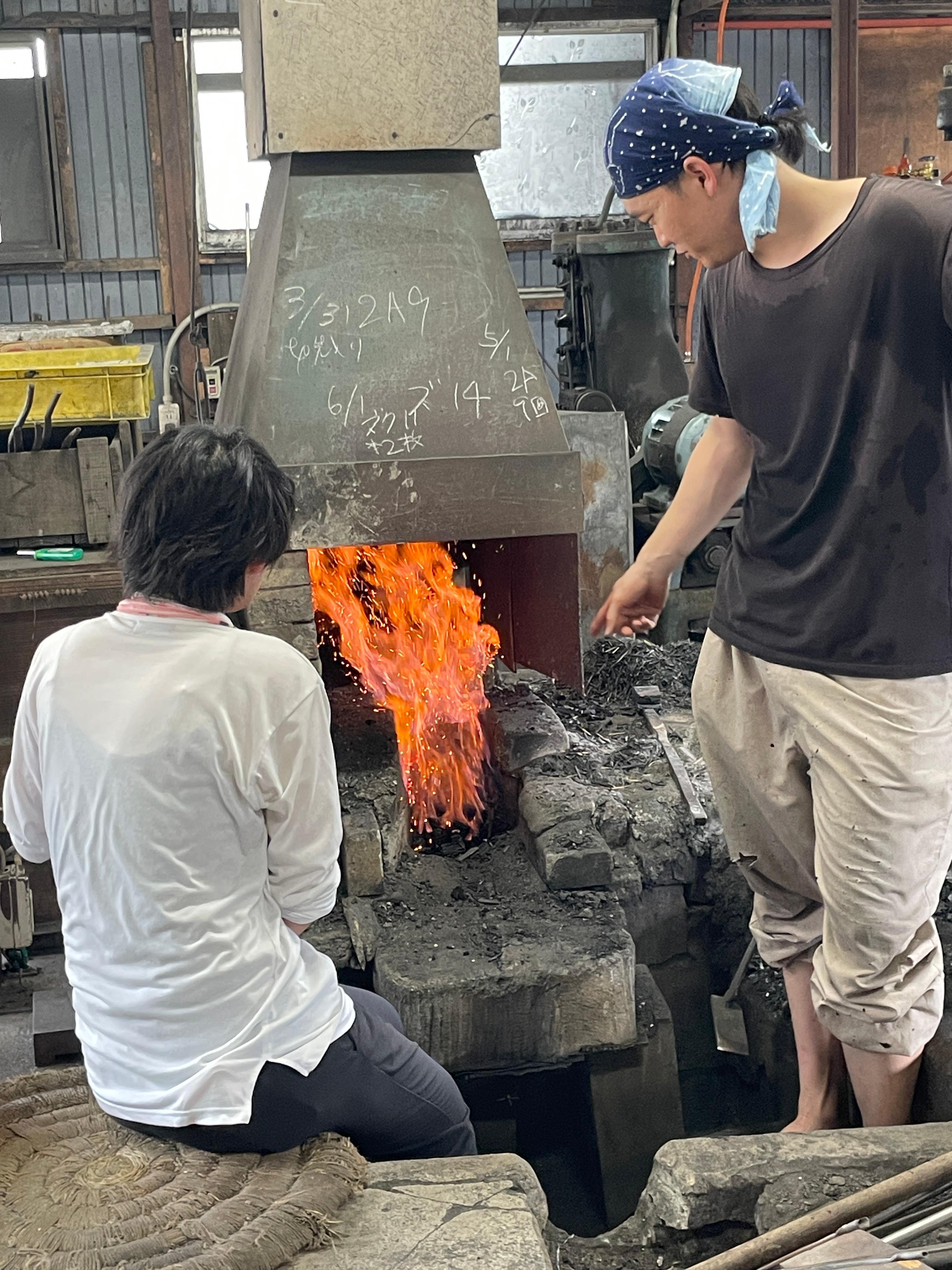
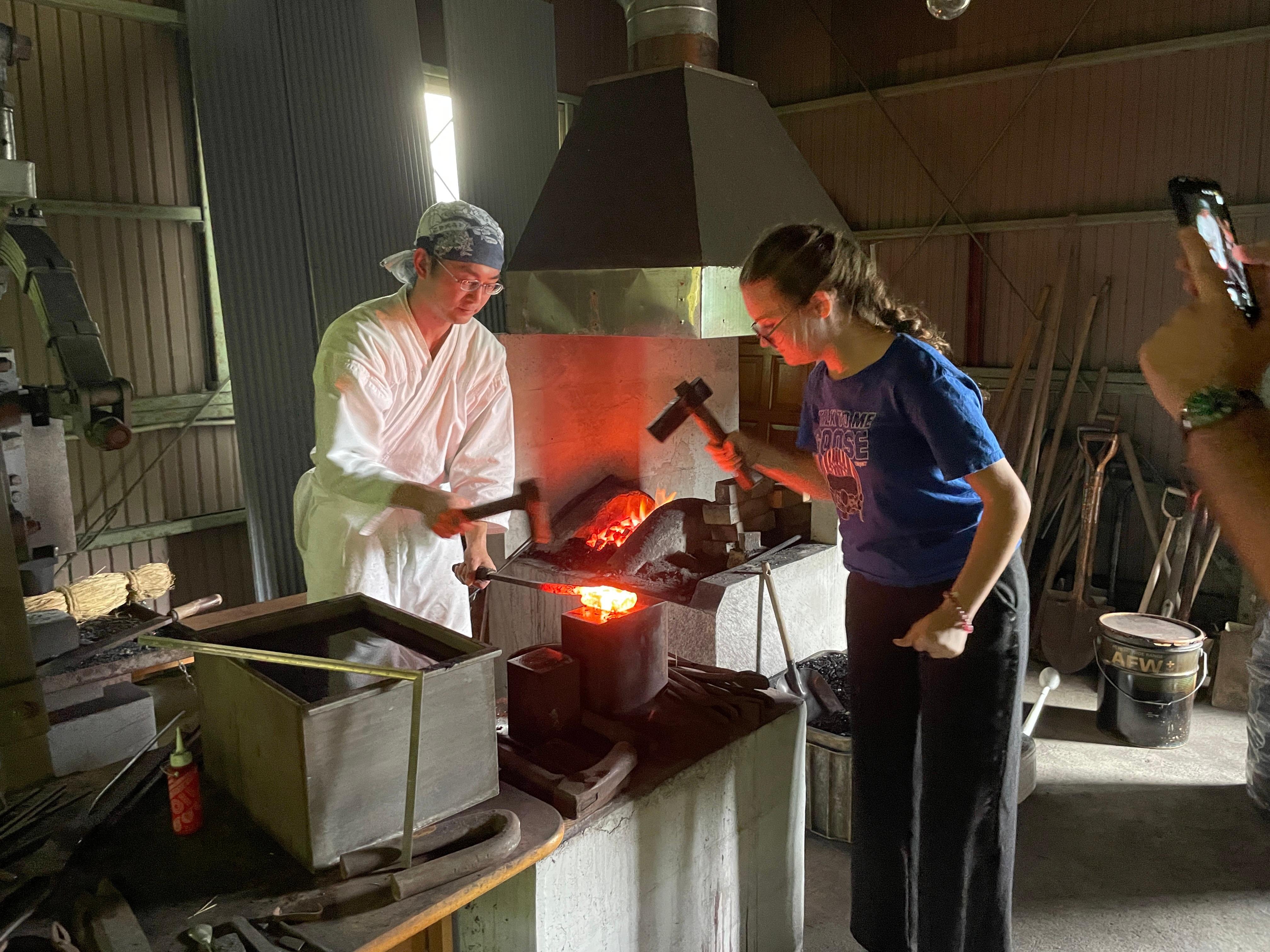
You reach 9-1 Minamikasuga-cho in the morning, ideally between 09:00 and 16:00, and pay the 300 JPY admission at a counter facing the courtyard. Remember that Tuesday is a closed day. Inside, you move first past cases of tamahagane — raw, grey, unpromising lumps of smelted iron sand — then along a wall of blades angled so the hamon catches the light. You lean in. The three-peaked temper line resolves only when you shift your head. Outside, in the demonstration forge, you take a place on the bench. The smith draws a billet from the charcoal at orange heat, and two strikers bring their sledges down in alternating time. Sparks scatter across the earth floor. You feel the concussion through the seat before you hear it. If you have reserved a hands-on booking, the afternoon shifts from watching to working. You hold the tongs. You swing, badly at first, and a master corrects your grip without slowing the count. On a Damascus workshop you watch layers surface under the file; on a tamahagane knife session you shape a blade you will carry home. Elsewhere in the city, a factory tour walks you past belt grinders and inspection tables. Your seki sword making tickets determine which of these doors opens — check the grid below before you travel.
The museum is open from 09:00 to 16:30, Wednesday through Monday, with a weekly closure on Tuesdays.
Adult admission is 300 JPY, high school students are 200 JPY, and elementary/junior high students are 100 JPY.
Yes, the facility is fully wheelchair accessible for all guests exploring the seki sword making history.
Yes, photography is allowed in the smithy during the seki sword making demonstration, provided you do not use flash.
We recommend arriving between 09:00 and 16:00 to avoid late afternoon crowds and fully appreciate the exhibits.
Yes, children are encouraged to view the traditional art of seki sword making under adult supervision.
There is no strict dress code, but comfortable walking shoes are suggested for your seki sword making tour.
Food and drink are not allowed in the exhibition areas; please enjoy them outside or at the nearby teahouse.
The museum is a 5-minute walk from Hamono Kaikanmae Station; ample parking is also available for visitors.
Yes, you can easily visit the Feather Museum, which is just a short walk from the seki sword making center.